|
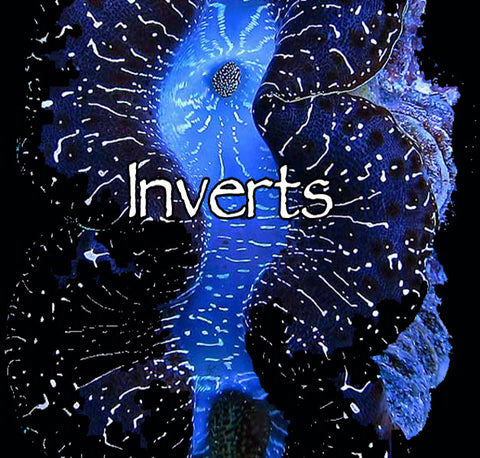
The giant (Tridacnid) clams commonly found in our hobby
are Crocea, Derasa, Maxima, Gigas and Squasmosa. In general they are
hardy animals but require intense lighting and stable water parameters.
It's important that temperature, pH and salinity is not constantly swinging.
Nitrates (under 10) and phosphates are less of a concern but calcium
(350mg/L or more) and alkalinity (8-12 dKH) are very important for long
term success.
Lighting:
As a rule of thumb, the brighter the clam the more light
it will require. Crocea and blue Maxima clams require the most light
of all the clams and require metal halides or powerful T5 lighting. There is no general formula
on how much light you need as it depends on too many variables such
as the type of clam, depth of placement and tank size. However, It's
best to use a light spectrum of around 10k to 14k.
Acclimation:
Like most inverts, acclimation is very crucial to survival.
Acclimation time can range from 1 to 3 hours and the best way to do
this is to use drip acclimation. If you don't feel like testing the
parameters in the bag and comparing them to your own tank, it's best
to play it safe and acclimate for 2-3 hours. This method can be found
here.
It's generally recommended that you also do a light acclimation
by placing the clam low in the tank and slowly move it up towards the
light. If you decide to do this, make sure to place a piece of flat
rubble under the clam so that it will not have to reattach when it moves
up.
Flow:
In general clams don't enjoy direct flow but the tank
itself should have moderate to high flow. Make sure the clam mantle
is not flapping around. Slight mantle movement is fine.
Feeding:
Clams less than 2 inches require feeding. Live phytoplankton
is probably the best choice. Another good option is oyster eggs. Never
feed clams large particles of foods such as Mysis, Brine or any type
of shrimp, and never target feed. If its individual particles are visible
then it's probably too big. Clams that are around 3 inches or larger
can rely 100% on photosynthesis and will not demand feeding but can
benefit from them.
Healthy Clams:
There are various ways to check if clams are healthy.
1. Do a shadow test: Healthy clams are extremely sensitive
to shadows and when you wave your hand over a clam it should retract
quickly. When we take a top down photographs it's always a major pain
since we are directly over the light.
| Here is a video of how fast clams should respond to light. |
|
2. Touch test: The slightest touch should cause the retraction
of the clam's mantle. Sometimes running across the room can cause the
mantle to retract!
3. Check for gaping. Healthy clams should
not have large circular holes at their mouth (intake). There is
an exception with Crocea clams which can gap when it's perfectly
healthy. However, if you do see your Crocea gap you should be on
the look out to see if it's shells are gaping. You can tell by looking
at the side of the clam where the two shells are joined and make
sure it's not gaping too much.
|
|
4. Check for parasites on their shell. The most common parasite is the
pyramid snail which resembles a small grain of rice. They usually come
out to prey at night so check after a few hours the lights are off.
|